Recycling and Sustainability for Landscaping Bethnal Green
 Landscaping Bethnal Green is built around a simple idea: greener outdoor spaces should also mean greener working practices. From garden clearances to planting projects and hard landscaping, every stage creates opportunities to reduce waste, recover materials, and cut carbon. Our approach to recycling for landscaping in Bethnal Green focuses on practical reuse, responsible sorting, and reliable local disposal routes that support a cleaner borough.
We aim for a minimum recycling percentage target of 85% across suitable green waste, inert materials, packaging, and reusable site materials. That target guides how we separate soil, timber, stone, metal, and plant matter before anything leaves site. By setting a clear target, Landscaping Bethnal Green can measure progress and keep improving how much material is diverted from landfill or incineration.
In a neighbourhood where space is limited and projects often involve mixed materials, good sorting matters. Local boroughs across East London have increasingly strong approaches to waste separation, with clear streams for green waste, metals, wood, hardcore, and general rubbish. Our landscaping waste recycling process follows that same logic, helping ensure that each load is kept as clean as possible for recycling or recovery.
 One of the most important parts of sustainable landscaping is identifying what can be reused before deciding what must be removed. Broken paving slabs may be suitable for sub-base use, untreated timber can sometimes be repurposed, and healthy branches or cuttings can be processed into mulch. Even soil from a garden redesign may be screened and reused where conditions allow, reducing the need for new imports and lowering transport emissions.
Local transfer stations play a major role in this system. By using nearby transfer and sorting facilities, landscaping waste can be handled efficiently and diverted into appropriate recycling streams. These facilities help separate heavy rubble, mixed green waste, wood offcuts, plastics, and metals before onward processing. For Landscaping Bethnal Green, local handling keeps journeys short and supports a lower-carbon waste chain.
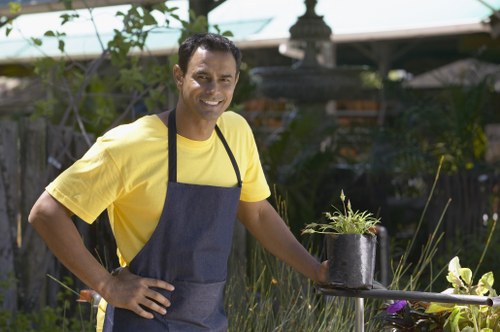 We also make careful decisions about the type of waste generated by each job. Grass cuttings, leaves, hedge trimmings, and other organic material are kept apart from aggregates and building debris. This matters because clean green waste is easier to compost or process into soil improver, while masonry and stone are better suited to crushing and reuse. A well-organised site makes landscape recycling in Bethnal Green more effective from the start.
Our sustainability work extends beyond material recovery. We maintain partnerships with charities and community reuse organisations so that suitable items can be redirected rather than discarded. Plant pots, surplus timber, functional tools, and salvaged decorative pieces may be passed on where appropriate. These partnerships support a circular economy, helping useful materials serve a second life in community gardens, training projects, and local improvement schemes.
Charitable partnerships also help reduce waste from larger landscaping jobs. When a client replaces edging, sleepers, or garden features, some elements may still be usable even if they are no longer required on site. By working with charities and reuse groups, Landscaping Bethnal Green can reduce landfill pressure and support local organisations at the same time. It is a modest change with a meaningful environmental benefit.
To further cut emissions, we are steadily expanding the use of low-carbon vans for collections and deliveries. These vehicles are chosen to reduce fuel consumption and support cleaner travel across the borough. For short urban journeys, low-emission vans are especially effective because they limit exhaust output during stop-start driving and help improve air quality around homes, schools, and green spaces.
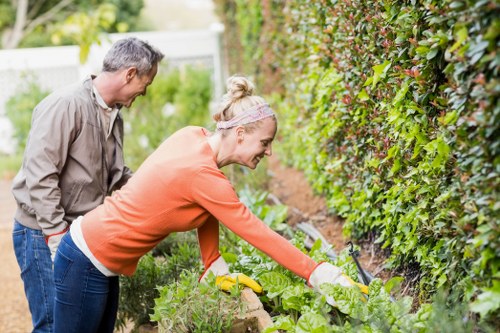 The choice of vehicle matters as much as the choice of disposal route. By matching van size to load size, planning routes efficiently, and avoiding unnecessary repeat trips, we reduce the carbon footprint of each project. This approach is particularly useful in Bethnal Green, where access can be tight and efficient logistics make a real difference to both cost and environmental impact.
We also support responsible recycling of packaging and consumables associated with landscaping work. Cardboard, plastic wrapping, metal fixings, and empty bags are sorted where facilities allow. Timber pallets may be reused or channelled into recovery routes, while soil bags and plant containers are separated from organic waste. Small actions like these are part of a broader sustainability plan for Landscaping Bethnal Green.
 Looking ahead, our sustainability goals remain focused on measurable improvement: keep raising the recycling percentage, strengthen reuse partnerships, and continue transitioning to lower-carbon transport. By combining local transfer stations, careful waste separation, charitable reuse, and efficient vehicles, Landscaping Bethnal Green aims to deliver attractive outdoor spaces with a lighter environmental footprint.